
GLP-1 Nutrition, Muscle & Gut Support
Practical support for preserving muscle, filling nutrition gaps, and keeping your gut on track while taking a GLP-1 medication.
GLP-1 medications such as semaglutide and tirzepatide can be highly effective for weight management and blood sugar control. But eating less also means there is less opportunity to get the protein, vitamins, minerals, fiber, and overall nutrition your body needs.
The goal is not to add a long list of supplements.
It is to make the nutrition you do get count.
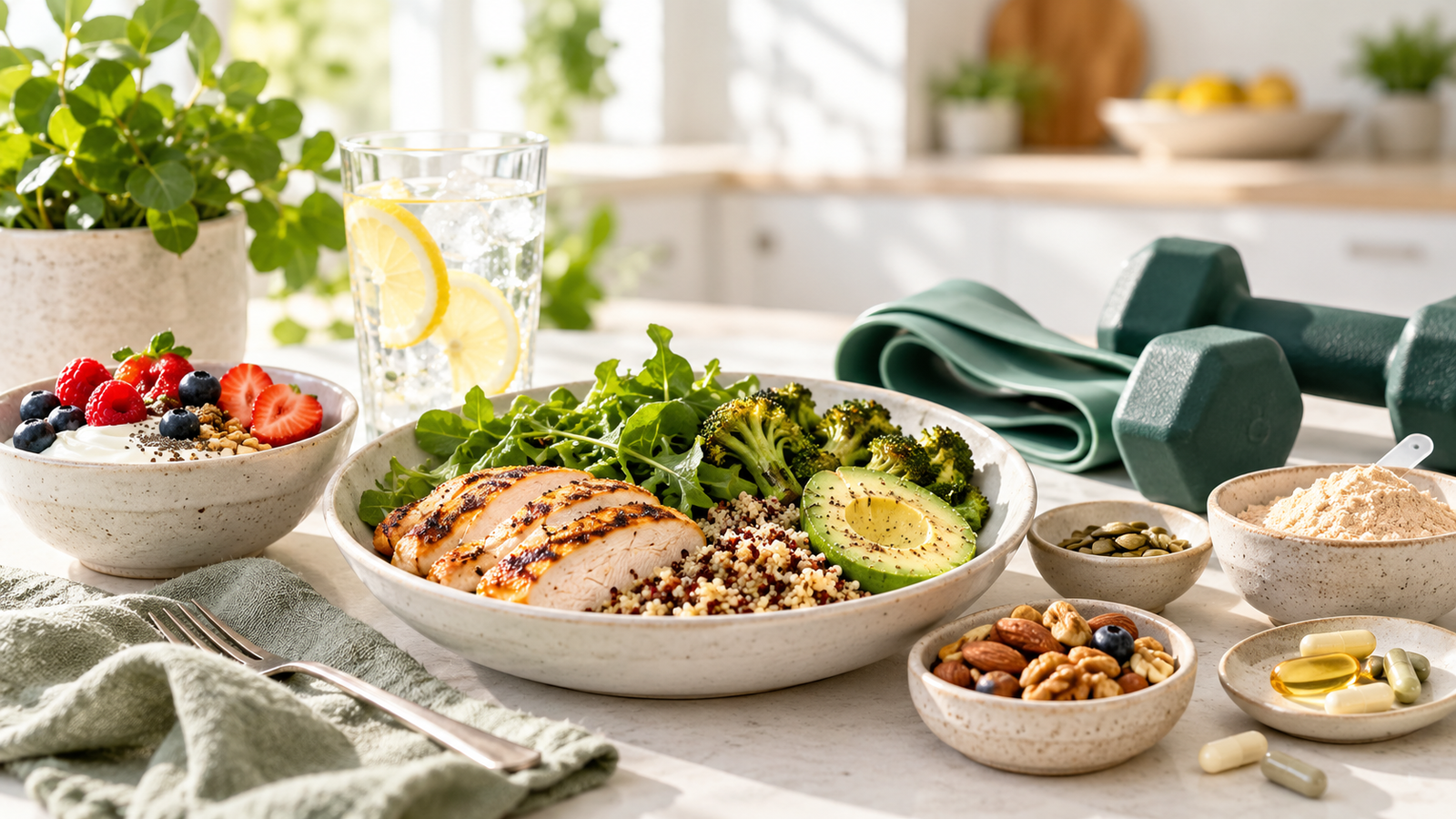
The Reasonable Approach to GLP-1 Nutrition
When appetite drops, three things deserve particular attention:
Protect your muscle
Weight loss is not automatically fat loss. Some of the weight lost while using GLP-1 medications can come from lean muscle.
Protein and resistance training work together to help preserve it.
Cover nutritional gaps
Smaller portions can make it harder to consistently get enough vitamins and minerals from food alone.
A simple nutritional foundation can help fill those gaps while your intake is lower.
Keep your gut moving
Constipation, bloating, diarrhea, and changes in bowel habits are common with GLP-1 medications.
Fiber, fluids, and thoughtful gut support can make the experience much more manageable.
Start Here: Move Your Muscles
Strength training matters more than any supplement on this page.
Protein helps provide the building blocks your muscles need.
Resistance training tells your body to keep using those muscles.
Aim for strength-focused activity about 2–3 times per week, using whatever works for you:
- Weights
- Resistance bands
- Machines
- Body-weight exercises
You do not need to become a bodybuilder.
You simply need to give your body a reason to hold onto muscle while your weight comes down.
Supplements can support that process. They cannot replace it.
Protein Is the Priority
When your appetite is reduced, protein deserves the first seat at the table.
A common target while losing weight is approximately 80–120 grams of protein per day, or roughly 1.0–1.6 grams per kilogram of body weight, depending on the individual.
A simple strategy: eat the protein first.
Before you get full on everything else, prioritize nutrient-dense protein foods such as:
- Greek yogurt
- Cottage cheese
- Eggs
- Fish
- Lean poultry
- Beans and lentils
- Nuts and nut butters
If food alone is not getting you to your target, a whey or milk-based protein shake can be an easy way to add meaningful protein without a large meal.
It can be especially useful after strength training.
Supplements That Can Support Your GLP-1 Routine
These are not replacements for food or exercise. They are practical tools for filling specific gaps that become more common when appetite and total food intake decrease.
Protein
What it supports:
Muscle maintenance and recovery during weight loss.
How to think about it:
Food is the foundation. Protein powder is simply a convenient way to close the gap when smaller meals make your daily target difficult to reach.
A reasonable approach: Build meals around protein first, then use a shake when needed rather than automatically adding one every day.
Daily Multivitamin + Mineral
What it supports:
Broad nutritional coverage when overall food intake is significantly reduced.
Eating less can make it harder to consistently get enough iron, calcium, magnesium, zinc, vitamin B12, folate, and vitamins A, D, E, and K.
A reasonable approach: A complete once-daily multivitamin/mineral can serve as a simple nutritional safety net while portions are smaller. Specific nutrients can still be adjusted later when symptoms, diet, or laboratory testing suggest a particular need.
Vitamin D
What it supports:
Normal muscle, bone, and immune function.
Low vitamin D is common, and inadequate levels are associated with muscle weakness.
A reasonable approach: Vitamin D makes the most sense when you know your level. If you are already getting vitamin D through your multivitamin, additional supplementation may or may not be necessary. More is not automatically better.
Omega-3 Fatty Acids
What they support:
General cardiovascular health with potential additional support for muscle maintenance and recovery.
Research suggests EPA and DHA may help support muscle, particularly when paired with resistance training. Studies showing muscle-related benefits have often used more than 2 grams per day of combined EPA + DHA, although the ideal amount depends on the individual.
A reasonable approach: Think of omega-3s as supportive nutrition—not a substitute for protein or exercise.
Creatine + Leucine / HMB
What they support:
Additional muscle support when maintaining lean mass is a priority.
Creatine supports muscle strength and performance, while leucine and its metabolite HMB are involved in the signals that help your body build and maintain muscle tissue.
A reasonable approach: These are optional additions rather than the starting point. Get your resistance training and protein intake reasonably consistent first. Then consider additional muscle support when it fits your goals.
Fiber
What it supports:
Bowel regularity, stool consistency, and the gut microbiome.
Constipation and changes in digestion are common with GLP-1 medications. Partially hydrolyzed guar gum (PHGG) is one gentle, well-studied soluble fiber option that can support regularity while also feeding beneficial gut bacteria.
A reasonable approach: Start low and increase gradually. Adding a large amount of fiber all at once can create more gas and bloating—the exact opposite of what you are trying to accomplish. And fiber works much better when you are drinking enough fluid.
Probiotics + Prebiotics
What they support:
A balanced gut microbiome and digestive health.
Prebiotics provide food for beneficial bacteria, while probiotics introduce selected microorganisms directly. The evidence specifically for GLP-1-related digestive symptoms is still developing, so these are best viewed as optional tools rather than requirements.
A reasonable approach: If your digestion is doing well, you may not need to add anything. If your bowel habits, gas, or bloating have changed, targeted microbiome support may be worth trying alongside fiber, fluids, and dietary adjustments.
When Your Stomach Is Not Happy
Digestive changes often become more noticeable when starting a GLP-1 medication or increasing the dose.
Before reaching for multiple supplements, start with the basics:
Eat smaller portions. Prioritize protein. Increase fiber gradually. Drink enough fluid. Pay attention to which foods consistently make symptoms better or worse.
For occasional gas or bloating, over-the-counter simethicone can also provide short-term symptom relief.
The goal is not a perfect digestive system.
It is finding a routine that makes the medication sustainable for you.
A Simple Daily GLP-1 Foundation
You do not need to do everything on this page.
A practical starting routine can be remarkably simple:
Everything else is an optional layer.
What Matters Most
The best GLP-1 nutrition plan is not the one with the most supplements.
- Lose weight without unnecessarily losing muscle.
- Get enough nutrition despite eating smaller portions.
- Keep digestion comfortable enough to stay consistent.
That is the foundation.
Supplements simply help fill the gaps.
A Note on the Evidence
There is strong reason to protect protein intake and lean muscle during weight loss, but much of the research behind specific muscle-support strategies comes from studies of weight loss, aging, and resistance training rather than trials conducted exclusively in people taking GLP-1 medications.
That distinction matters.
The evidence supports a clear foundation:
Adequate protein. Resistance training. Nutrient-dense food. Appropriate nutritional supplementation when intake falls short.
Beyond that foundation, supplements should be selected for a reason—not simply because someone is taking a GLP-1 medication.
Health & Reason may earn revenue from purchases made through its Fullscript dispensary. That relationship does not determine what is recommended.
Educational information is not a substitute for individualized medical advice. Discuss questions about medication, nutrition, or supplements with a qualified healthcare professional.
Reviewed and edited by Kyle Smith, PharmD, MBA
Related collections: Gut Health and Magnesium.